
President William Ruto’s establishment of the State Department for Diaspora Affairs signalled the government’s appreciation of the diaspora beyond rhetoric, recognising its growing influence and strategic importance. Kenya’s economy, like many others across Africa, has been shaped by successive global economic tides. From the Washington Consensus, which ushered in the era of Structural Adjustment Programmes whose effects were deeply felt across Kenya and Sub-Saharan Africa, to the commodity boom of the early 2000s and the wave of oil exploration in the 2010s, each period has redefined national development priorities. Today, another tide appears to be emerging: remittances. Driven by the rapid growth of the African diaspora, remittances are increasingly becoming a strategic pillar of Kenya’s economy.
Sceptics have warned that an economy overly reliant on remittances could experience a new form of Dutch disease. However, scholars Christian Nsiah and Bichaka Fayissa argue that the risk of remittances generating Dutch disease in African economies is considerably lower than that associated with windfall revenues from natural resources. Unlike commodity booms, remittance inflows tend to be more stable and broadly distributed across households.
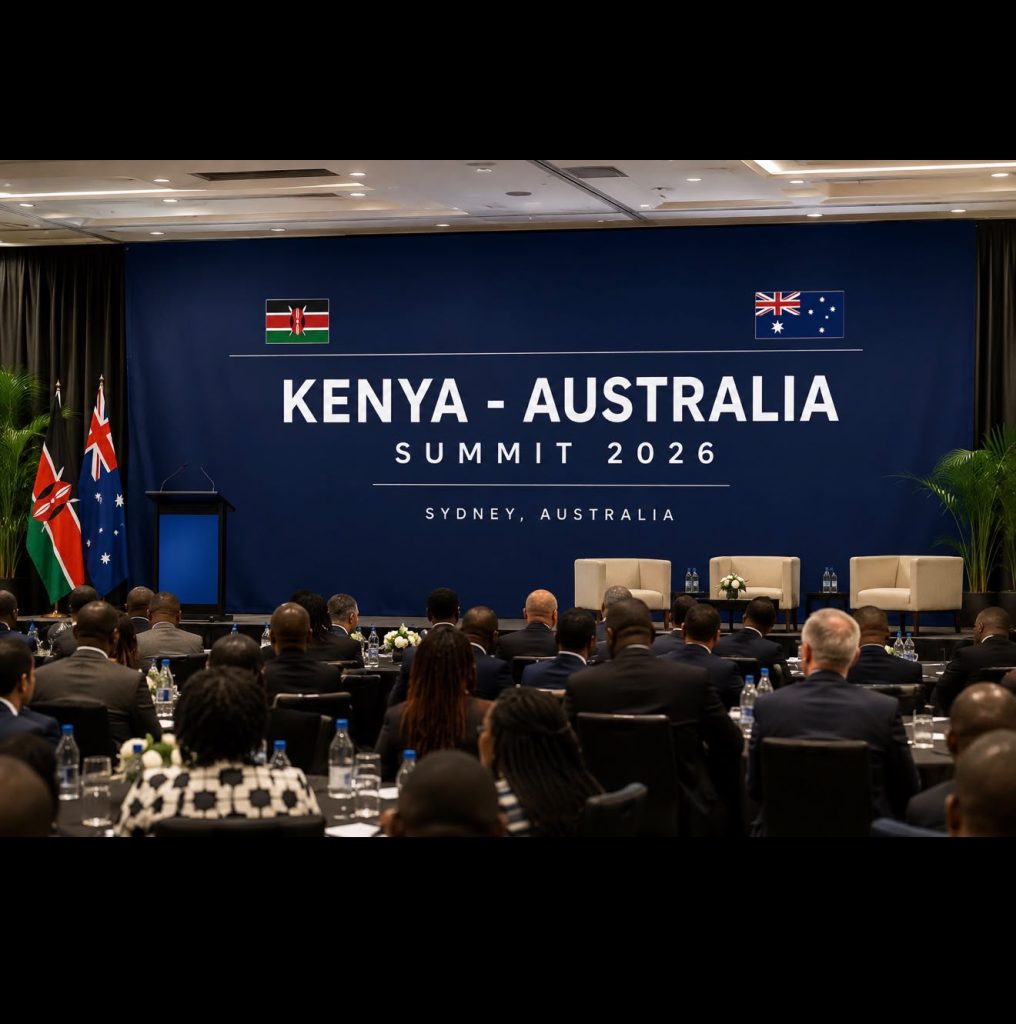
Another shift has emerged. Beyond the extension of political rights to the diaspora through the Independent Electoral and Boundaries Commission (IEBC), diaspora communities are increasingly becoming ambassadors of their countries. The upcoming Kenya–Australia Summit is one of the strongest indicators of this evolution.
Scheduled for 11 September, the summit is significant for several reasons. Most notably, it is the first summit of its kind to be driven and championed by a diaspora organisation, whereas such initiatives have traditionally been led by government institutions, with diaspora organisations playing only a secondary role. In this case, however, the roles are reversed. Government agencies become supporting actors, while the summit draws its strength from the lived experience, professional networks, and local knowledge of Kenyans who have established themselves in Australia.
The summit has been deliberately structured around three complementary pillars to cater to both investors and the Kenyan diaspora in Australia. Running concurrently during the morning session will be a business exhibition and a symposium.
The symposium will bring together market leaders and professionals from technology, finance, health, mining, education, and investment to discuss industry trends, career pathways, emerging opportunities, and the skills needed to succeed in both Kenya and Australia. Among those who have played a critical role in shaping this phase is Dr. Millicent Oulo, PhD, who views the initiative as an important step towards identifying the skills gaps between Kenya and Australia and strengthening knowledge exchange and collaboration.
Running alongside the symposium, the exhibition will showcase investment opportunities and development projects from Kenya and Australia, allowing delegates to explore partnerships and investment prospects. Together, the exhibition and symposium seek to create practical pathways for trade, investment, and bilateral cooperation.
The summit will conclude with a Kenya-themed gala dinner featuring keynote addresses from representatives of both countries, reinforcing priorities in trade, investment, education, and bilateral cooperation while providing a platform for high-level networking.
The summit is also timely. It follows shortly after the highly regarded Africa Down Under Mining Conference, which has, over the years, brought together senior government officials, investors, and industry leaders from across the continent, including Kenya’s Cabinet Secretary for Mining, Blue Economy and Maritime Affairs, Ali Hassan Joho, and his delegation. The success of that conference prompted a broader question among the organisers: if a sector-specific conference can generate such significant engagement, what could be achieved through a summit dedicated exclusively to Kenya and spanning multiple sectors?
This reflects a broader evolution in international engagement. While Africa is often approached through regional frameworks, countries are increasingly pursuing deeper bilateral partnerships where strategic interests exist. Australia’s expanding trade, Austrade engagement, and long-standing Australia Awards programme demonstrate its growing country-specific engagement with Kenya. These developments suggest that Kenya is increasingly being engaged as a strategic partner. It is within this evolving bilateral context that the Kenya–Australia Summit seeks to position itself.
The organisers of the summit, drawn from the Kenya Community NSW, reflect the very diaspora capacity this article highlights. They include investment firm manager Dr Fredrick Chege, Chebet Mutwol, well known for her advocacy for teacher migration pathways, Dr. Millicent Oulo, Phibian Koech, Eric Too, among others. The objective extends beyond a single event: to establish the Kenya–Australia Summit as an annual platform for trade, investment, tourism, skills mobility, and diaspora-led economic diplomacy.
Recent engagements between the Kenya Community NSW and the Kenya Tourism Board, aimed at boosting tourism from Australia to Kenya, further demonstrate the growing recognition of diaspora organisations as practical partners in national development. This recognition is also reflected in the Kenya Community NSW’s parliamentary submission to the Australian Parliament’s Joint Standing Committee on Foreign Affairs, Defence and Trade, which advanced Kenya’s case as a strategic trade and investment partner while highlighting the diaspora’s role in strengthening bilateral economic relations.
As diaspora communities become more professionally established, they accumulate networks, institutional knowledge, market intelligence, and credibility within their host countries. These forms of social capital are as valuable as remittances. When organised through credible institutions, diaspora organisations can reduce information barriers for investors, facilitate business partnerships, identify skills gaps, and strengthen policy dialogue between governments and the private sector. Rather than replacing the role of the state, they complement it by operating where governments often have limited local networks and reach.
At a time when Kenya seeks greater foreign direct investment, ethical labour migration pathways, access to international markets, and opportunities for its young population, diaspora organisations are increasingly positioned as institutions of economic diplomacy. Supporting this view, Ambassador Wilson Kogo and Patrick Maluki argue that empowering diaspora associations as formal stakeholders in Kenya’s growth processes can improve accountability, create trusted investment pathways, and deepen diaspora ownership of national programmes. The Kenya–Australia Summit therefore represents an emerging model of diaspora-led diplomacy, demonstrating how organised diaspora institutions can convene governments, markets, and communities to advance Kenya’s long-term economic and strategic interests.
Mathew Gitau
President Kenya Community NSW
